


Getting to Know Me – A Soiree Wine Aerator Giveaway
November 5, 2010
 I’d like everyone to welcome a new sponsor!

Soirée is a perfect accessory for any wine bottle and is a proud new sponsor of this website!
It fits securely into any wine bottle allowing you to pour, without dripping directly through the Soirée. By pouring through a Soirée, it infuses the wine with oxygen and then cascades into your glass, therefore the subtleties and character of the wine become more noticeable.
Since the Soiree has been my preferred choice in wine aerator for the past few years and since I’ve decided that you need to get to know me a little better, I’m going to "air” a few facts about myself! Get-it?!?! Ok, bad joke…
Below I have written 5 facts about myself. 4 of them are true, 1 is false.
All you have to do is pick the one false fact and email me at kris@blogyourwine.com. The first correct answer received will win a Soiree Wine Aerator, just make sure you provide your name and mailing address.
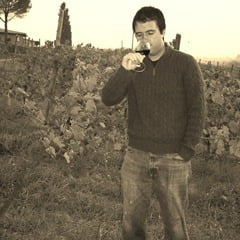 5 Facts:
a) I can play the guitar.
b) I once starred in a Durex TV commercial where I played a 9 foot tall walking sperm.
c) I’m allergic to feathers.
d) I‘m English but I hate football (soccer).
e) I like romantic comedies a little too much for a straight male.
Posted in Giveaways | Leave a comment //
Eleven South Champagnes for Around the World
November 5, 2010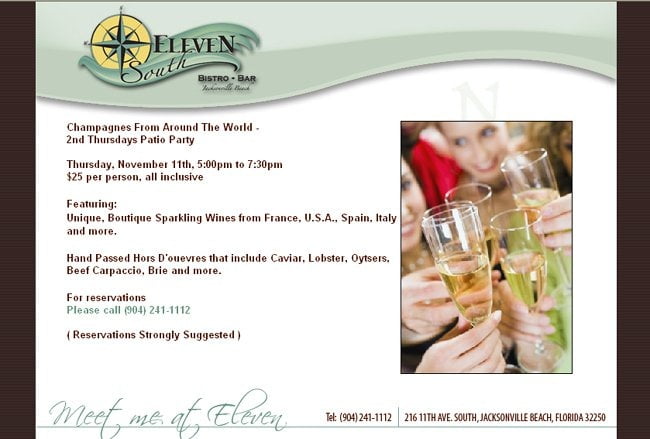
Edelzwicker
November 5, 2010 Edelzwicker [pronounced the same way you read it] wines are from the North-Eastern French region of Alsace [Ahl-zass]. If we breakdown the name, we can see that Edel=noble and Zwicker=mixture, basically meaning that the wine is a blend of the noble grapes traditionally found in the region i.e. Pinot Gris, Gewurztraminer, Riesling or Pinot Blanc. The wines are normally light, dry and best consumed young with fish and cheese dishes.
Layer Cake Virgin Chardonnay 2009
November 5, 2010
Grapes
100% Chardonnay
Facts
The Layer Cake Virgin Chardonnay is named for the fact the wine never comes in contact with any oak, all fermentation / aging is done in stainless steel tanks. In winemaker Jayson Woodbridge’s own words: “… I think a lot of wine drinkers are tired of the over-oaked Chardonnays that hide the floral and citrus characteristics and subtle varietal aromatics that a true Chardonnay should have.”
The name Layer Cake supposedly comes from Woodbridge’s “grandfather’s comparison of vineyard soil to a layer cake”. I don’t doubt it, however Woodbridge is looking to give international appeal to his wines or brands, and who doesn’t think a wine called "Layer Cake" could possibly be quite delicious!?!? In other words, I propose that the name “Layer Cake” is more marketing that it is nostalgia (but who really cares?).
Layer Cake produces 5 wines from 5 different countries, an Italian Primitivo (Zinfandel), Argentinean Malbec, Australian Shiraz, Napa Cabernet and their Virgin Chardonnay. They used to make a Cotes du Rhone, but recently stopped production.
The grapes are all sourced from different vineyards in and around each region. In other words, they don’t grow any of their own grapes used to make the wine. This is normally used to keep a winery operation more economical, but some argue that quality can sometimes suffer if meticulous grape selection is not used.
Place
 Central Coast vineyards benefit from the cooling effects of winds and fog that come through the Monterey Bay each afternoon. This preserves crisp acidity and aromatics in the grapes.
The Central Coast is comprised of the counties of Alameda (Livermore Valley), Contra Costa, Monterey, Santa Barbara (Santa Ynez Valley), San Benito, San Francisco, San Luis Obispo (Paso Robles), San Mateo, Santa Clara and Santa Cruz (Santa Cruz Mountains).
Winemaking in the Central Coast dates back more than 200 years, when the very first vines were planted by Franciscan monks in Monterey County and Santa Barbara, although they primarily used their wines for sacramental purposes.
A lot of the land between L.A. and San Francisco is actually former ocean floor and made up of sand and limestone. This gives good drainage and low nutrition to vines which aids root development, limits vine growth (which is a good thing) and therefore a low water-to-sugar ratio which concentrates flavors.
Taste
No big surprises on the nose, crisp lemon, Granny Smith apple, and wet stone.
The taste was actually a very big surprise! I expecting just a very stereotypical un-oaked Cali Chard, but then again I forgot Jayson Woodbridge was making it! The palate shows a little banana, pineapple and pink grapefruit, plenty of lime, lemon and green apple, and a touch of yeast and anise. Finishes dry and with a medium-lengthy finish.
I checked out the Layer Cake website and word-for-word, this is one of their tasting notes: “…a hint of lemon meringue pie baking inside the cottage nearby…”. I wish I was that poetic!
This is a very well made Chard for the money, I just wish I had discovered it earlier in the warmer months!
Pairing
The usual suspects: chicken, cheese, fish. Also give thought to spicy dishes, lobster in a buttery sauce, shellfish, pork and turkey, or just drink by itself on a hot autumn day (if that makes any sense to the people reading this that live outside of Florida).
Availability
$12.99 from World Market ($14.99 if you’re not a rewards member)
Posted in Reviews | Leave a comment //Interview with Conundrum Winemaker Jon Bolta
November 5, 2010

On Saturday October 2nd I drove down to Orlando to attend the Conundrum wine blending seminar with winemaker Jon Bolta, the Epcot Food and Wine Fest and the Party for the Senses, ALL IN ONE DAY! Needless to say, I was exhausted by the end of it all, but I did manage to catch 5 minutes with Conundrum winemaker Jon Bolta…
How long have you been with Conundrum?
About 30 years.
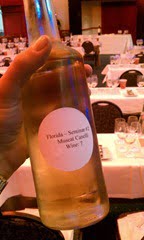 Conundrum is constantly evolving each year based on the grapes you use, could you tell me a little about that blend.

We use 5 grapes in the Conundrum blend, although we do also have some Pinot Gris and Pinot Blanc planted as well as a few other varietals. Basically Conundrum is Muscat, Chardonnay, Semilion, Viognier and Sauvignon Blanc.
And you change the blend every year based on what?
We change the blend every year depending on what mother nature throws us, some years are higher acid, some years are higher sweetness. The basic premise of the wine is to bring that floral Muscat nose out and not wash it out with the other varietals. However I/we like to also bring out the flavors of the other varietals, the clean crisp acidity of the Sauvignon Blanc, the fat weightiness of the Chardonnay. I like each of the grapes to “pop” without masking another.
Posted in Interview | Leave a comment //Interview with Sandra Bell from Bell Winery
November 5, 2010
 Name?
Name?

Sandra Hewitt Bell
Occupation?
Wearer of many hats for Bell Winery! [Laughs] I actually take care of 6 markets for Bell and also hospitality and marketing at the winery.
How did Bell Winery come to be?
Bell winery really came to be from the Cabernet clonal work that Anthony did for Beaulieu Vineyards starting late ’79. This came straight after he finished his Masters at the University of California Davis. He was given the task of improving their Cabernet. At that time, there was no grower relations programme for BV. There was no reflection on the fact that the raw product (grapes) supplied to the winery were the most important part of the winery operation. At that point it seemed that the winemaker was some kind of “magician behind the curtain” and Anthony did a great deal to change the conversation about quality wine back into the vineyard. 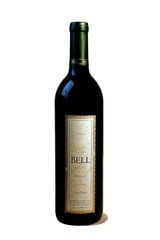 He did that by planting 14 different Cabernet clones that were available to Cabernet growers at the time, including several plants that were discovered along with a Professor of his that were found at an abandoned field station in the town of Jackson, California. Jackson as a town had donated a substantial portion of land back in 1882/83 in order for the University of California (which at that time was only Berkeley) to do an agricultural test study.
Anthony had taken clippings of some of these origin vines back to BV. These old vines weren’t producing a great deal of fruit, but they were certainly alive and kicking! That was the groundwork, the work itself was making wine from these 14 different Cabernet plants and letting the people at BV taste the resulting wine. Over the course of several years, a consensus arose that out of these 14 clones, 3 clones were exceptional, and 1 was extraordinary.
← Older posts Newer posts →
-
Archives
- June 2014
- April 2014
- March 2014
- February 2014
- January 2014
- December 2013
- November 2013
- October 2013
- June 2013
- May 2013
- April 2013
- March 2013
- February 2013
- January 2013
- December 2012
- November 2012
- October 2012
- September 2012
- August 2012
- July 2012
- June 2012
- May 2012
- April 2012
- March 2012
- February 2012
- January 2012
- December 2011
- November 2011
- October 2011
- September 2011
- August 2011
- July 2011
- June 2011
- May 2011
- April 2011
- March 2011
- February 2011
- January 2011
- December 2010
- November 2010
- October 2010
-
Meta