


1950s Animated Melody Hill Wine Commercial
May 8, 2011 Posted in Funny | Tagged Commercial | Leave a comment //This Week In Wine – 5/7/11
May 7, 2011
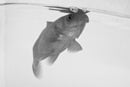 Warning: This wine may contain fish bladders

Wine lovers could be in for a bizarre shopping experience when a controversial federal law comes into effect in summer 2012. Get ready for label warnings declaring that your favorite beverage contains fish, eggs or milk.
As part of new Health Canada food and beverage regulations designed to protect allergy sufferers and people with severe food intolerances, alcohol producers will be required to list an array of odd-sounding “ingredients,” things you’d expect to find on a plate next to your Merlot rather than in it.
Animal-derived products have long been used in wine making as gentle clarifying agents after fermentation. Suspended particles become attracted to the substances, clump together and fall to the bottom of a tank or barrel. The clear wine is then separated from the sediment.
My thoughts:
I’m all about transparency, but sometimes a little knowledge is a bad thing. I already hear enough people complaining about “allergies” to sulfites, probably since U.S. wines are required by law to label with that statement. Curiously, these same people state that they drink wines in Europe without any problem, I’m guessing because the E.U. doesn’t require sulfites to be labeled!
I can already hear people asking for “… wine that doesn’t contain any fish bladders…”
Click here for the full story.
Posted in News | Tagged England, Germany, Rioja, Spain, Sulfites | Leave a comment //Top 8 Wineries Doing Facebook Right!
May 6, 2011
It was surprisingly difficult to write this article. This title originally was “Top 10 Wineries Doing Facebook Right!” but I just couldn’t find 10 wineries. A much easier post would have been “Top 200 Wineries Doing Facebook Wrong!” I could name-names, but that wouldn’t be very fair now would it?
The thing that makes all of this worse is that the really big ones, supposedly the ones with the big marketing budgets are generally the worst offenders.
The criteria I used to decide on my top 8 wineries was as follows:
– Active updating; either every day, or every other day.
– Engagement. Is the winery connecting with their fans, or are they just blasting out sell messages, trying to get people to buy.
– Quality of content. Does the winery post interesting and fun content (a combination of self created and outside links).
– The number of Page fans had nothing to do with the selection process.
With all of that being said, here are my top 8 wineries doing Facebook right (in no particular order):
Posted in News, Social Media | Tagged Facebook, Social Media, Wineries on Facebook | 3 Comments //Pretentious Things to Say at a Wine Tasting, Should You Want to…
May 5, 2011 If you are a regular reader of this site, you probably already know that I don’t take myself too seriously. There is a fine-line though. I like to have fun with wine, but there is occasionally a little more serious side to it.
The following is my list of Top 10 Pretentious Things to Say at a Wine Tasting. This list isn’t hypothetical, these are ACTUAL comments I have heard at wine tastings (apart from the one about Provence). Some of them are fairly legitimate, others are just plain douchey.
 “…well I used to live in Napa, so…”

Contrary to popular belief, living in or near Napa does not make you any kind of expert on wine. Your palate is no more refined. Your taste is no more discerning.
I lived in England for 21 years. It doesn’t make me an expert on bad teeth, tea and cricket.
Gewurz by Alexander Valley Vineyards – Gewurztraminer from Mendocino County
May 3, 2011
Grape
100% Gewurztraminer
Facts
Before we get started let’s get the pronunciation on the grape out of the way:
‘ga-VERTZ-trah-MEE-ner’ It’s a tough one!
Alexander Valley Vineyards decided a few years ago that the Gewurz was one of those wines
perfectly suited to bottle under a screw cap. This due to the fact that the wine should ideally be consumed within a few years of its vintage date.
What Are Tannins?
May 2, 2011
 Tannins; the same natural chemical found in tree bark, wood, tea, and used in the tanning process on animal hides therefore turning them into leather, is the same as what’s in your glass of Cabernet.
Tannic acid reacts with proteins in your mouth giving you that astringent-type feeling, that almost puckery-type sensation. If you’ve ever watch someone tasting a heavily tannic wine, such as Napa Cabernet or Italian Barolo, note that their facial expressions would almost indicate that they are chewing on the wine. These are tannins at work.
Tannins are found mainly in red wines, and come from the skins, seeds and stems of the grape, but oak aging of wine in barrels can also impart a certain amount of tannic acid.
In different wines from around the world you’ll find varying degrees of tannins, depending on the region where the wine was produced, the grapes used, and the winemaker. Younger Cabernet’s, Bordeaux’s and some Italian wines have a much higher tannic content and therefore benefit from extended aging in the bottle. This matures the wine and essentially lets it harmonize, letting all the different flavor components come together, and giving the tannins a chance to mellow out.
Posted in Facts | Tagged Cabernet, Sediment, Tannins | Leave a comment //← Older posts Newer posts →
-
Archives
- June 2014
- April 2014
- March 2014
- February 2014
- January 2014
- December 2013
- November 2013
- October 2013
- June 2013
- May 2013
- April 2013
- March 2013
- February 2013
- January 2013
- December 2012
- November 2012
- October 2012
- September 2012
- August 2012
- July 2012
- June 2012
- May 2012
- April 2012
- March 2012
- February 2012
- January 2012
- December 2011
- November 2011
- October 2011
- September 2011
- August 2011
- July 2011
- June 2011
- May 2011
- April 2011
- March 2011
- February 2011
- January 2011
- December 2010
- November 2010
- October 2010
-
Meta