


Have you ever had a bad case of the Tartrates?
December 3, 2010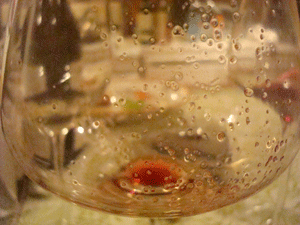
Along the same lines as sulfites, tartrates are another substance found in wine that have been given a bad rap by wine drinkers!
As the pictures above show, tartrates are small crystal-like substances and are often mistakenly assumed by consumers as a fault with the wine, thought to be sediment, sugar or even shards of glass. Ask any Sommelier in a restaurant; they should be able to give you at least a few accounts of glasses / bottles of wine being sent back due to tartrates being found.
So what are tartrates?
Tartrates form in wine when naturally occurring potassium and tartrate molecules bind together in cold temperatures. Tartrates are essentially cream of tartar, and once a winery removes them (if they so choose), they can go on to sell them to the baking industry.
In order for a winery to lessen the likelihood of tartrates in your wine, they can attempt to remove them at the source by "cold stabilizing" stainless steel vats, bringing the temperature of the wine down to near freezing. The process isn’t cheap, and the equipment also costs a fair amount of money. This process makes the crystals cling to the sides of the vat, and the wine is then filtered off. The method isn’t always 100% effective, but if not carried out tartrates may form later in the bottle, especially if stored at a low temperature. For this reason, you normally see tartrates in white wine more than red wine, although older reds are also sometimes susceptible.
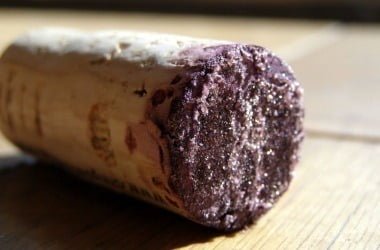
Winemakers are divided over whether processes such as "cold stabilization" in order to remove these "Wine Diamonds" (a cute term for tartrates) harm a wine by stripping it of flavor. In Europe, tartrates in a bottle of wine are common-place and even encouraged, due to their presence being an indicator of a more naturally made, sometimes higher quality wine. However, consumers in the U.S. are used to seeing clear, pure, filtered white wines with no particles, and so the presence of crystals can sometimes create panic!
Once you realize that your wine has a bad case of the tartrates, the only way to separate them from your wine is to decant, or pour it slowly into your glass. The one saving grace is that you can be safe in the knowledge that you are drinking a wine that has been handled with the utmost care.
Posted in Facts | Leave a comment //Holiday Season Celebration by Contemporary Catering of Jacksonville
November 30, 2010I’m kind of picky about what I post when it relates to other businesses, but this looked like a pretty cool deal.

Mythbusting the Punt
November 29, 2010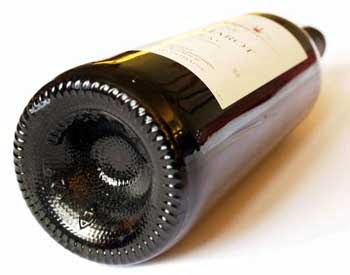
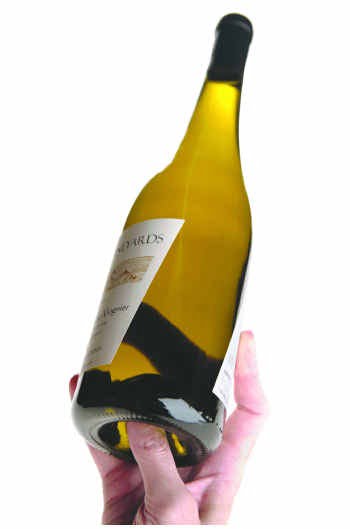
At the bottom of most wine bottles, you’ll find an indentation which if you want to get technical is called a "punt". There are many theories on the origin / purpose of the punt. The most common (and most likely) explanation, is that back in the day when wine bottles were hand blown, the bottom of the bottle would be left with a sharp point, or "pontil mark". Therefore many a homeowner would be left with their table covered in scratches, until some genius came along and created the punt by pushing the bottom of the bottle inwards during the glass blowing process.
Posted in Facts | 2 Comments //A First Look at the New Wine List and Menu for Suite at St. Johns Town Center.
November 28, 2010The nightclub Suite opens Dec. 3 in St. Johns Town Center. A joint venture between Black Finn American Grille and Whiskey River, the club appears to be fashioning itself as a sophisticated place of cocktails and small plates. I hate to say it but I really don’t have any more information than that, however I did manage to get my hands on a copy of their wine list and menu.
Suite Jacksonville Wine List and Menu
Posted in Events, News | Leave a comment //It’s that Time of Year Again! Mulled Wine!!!
November 27, 2010
The holiday season and colder weather always reminds me of Mulled Wine. Its history can be traced back to Medieval Europe where when wine went bad, it was often sweetened with honey or sugar, and flavored with spices to make it consumable again. With Europe being so cold in the winter, it also served the purpose of getting you drunk whilst keeping you warm! In Sweden it’s known by Gløg, in Finland it’s Glögi in Finland, in Germany it’s Glühwein, but whatever you want to call it it’s delicious!
The recipe for Mulled Wine is easy enough:
-take a couple of bottles of red wine (El Cheapo, but still drinkable).
-heat it up (don’t boil) in a large pan on your stove top.
-add “seasonal” spices (cinnamon sticks, nutmeg, cloves, star-anise, vanilla pods etc.) You may also need to strain through a coffee filter to remove some of the smaller spices.
-add sugar/honey as required according to your own taste.
-add slices of apples and oranges.
-if you don’t have a fireplace or fire-pit, invest in one. Serve and consume while sat roasting marshmallows.
Check out mulledwinerecipe.com for more information.
Posted in Facts, News | 2 Comments //Wine Spectator Top 100 Wines of 2010
November 24, 2010
Each year, Wine Spectator editors survey the wines they’ve reviewed over the past 12 months and select the most exciting for their Top 100.
This annual list, which debuted in 1988, reflects significant trends, spotlights successful regions and recognizes outstanding producers. In 2010, they reviewed more than 15,800 new releases from around the world in blind tastings. More than 3,900 of these wines earned outstanding or classic ratings (90 points or higher on their 100-point scale). They narrowed the list down based on four criteria: quality (represented by score); value (reflected by release price); availability (measured by cases made or imported); and an X-factor they call excitement.
Wine Spectator Top 100 Wines of 2010
Posted in News | Leave a comment //← Older posts Newer posts →
-
Archives
- June 2014
- April 2014
- March 2014
- February 2014
- January 2014
- December 2013
- November 2013
- October 2013
- June 2013
- May 2013
- April 2013
- March 2013
- February 2013
- January 2013
- December 2012
- November 2012
- October 2012
- September 2012
- August 2012
- July 2012
- June 2012
- May 2012
- April 2012
- March 2012
- February 2012
- January 2012
- December 2011
- November 2011
- October 2011
- September 2011
- August 2011
- July 2011
- June 2011
- May 2011
- April 2011
- March 2011
- February 2011
- January 2011
- December 2010
- November 2010
- October 2010
-
Meta